Quick Answer
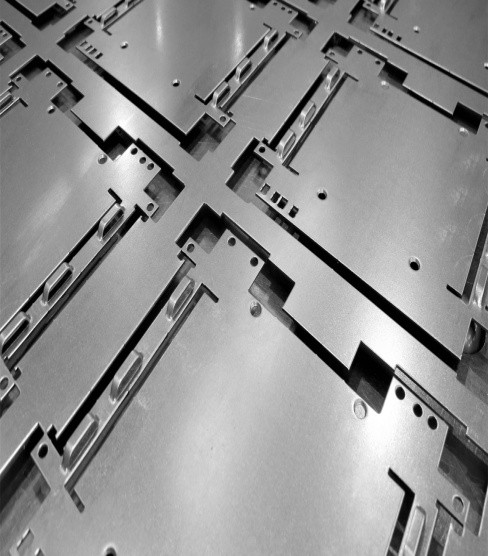
Fiber laser cutting jobwork is a pay-per-cut service where you send DXF/DWG cutting files and we deliver precision-cut sheet-metal blanks. KM Engineering operates a 4 kW fiber laser with 3000 × 1500 mm bed, cutting 0.5–6 mm CRCA, stainless, and aluminum to ± 0.1 mm tolerance — with same-day quotes, 3–7 day turnaround, and drop-file upload workflow for fabricators, OEMs and startups.
What Is Fiber Laser Cutting Jobwork?
Fiber laser cutting jobwork is a subcontracting service where a fabrication shop runs its fiber-laser cutting machine on your parts, charging per unit or per sheet. It is the fastest path from digital design (DXF) to physical sheet-metal blanks — no tooling cost, no minimum order, no long setup time. You supply the cutting file and raw material (or we supply the material), we cut and deliver the parts.
KM Engineering's fiber laser cutting jobwork service runs on a 4 kW fiber-laser with a 3000 × 1500 mm bed, supporting 0.5–6 mm CRCA, galvanized steel, stainless steel (SS 304/316/430) and aluminum (5052/6061). Typical cutting tolerance is ± 0.1 mm on parts up to 500 mm, with kerf of approximately 0.15 mm and excellent edge finish with minimal post-processing. We process a wide range of file formats: DXF (most common), DWG, DWF, AI, and IGES.
The jobwork service is used by sheet-metal fabricators (supplementing their own capacity during peaks), OEM machine builders (outsourcing blanks to save in-house laser time for production), hardware and EV startups (cutting single prototype blanks), signage and architectural shops (decorative cut-out work), and small fabrication workshops that don't own a laser. We accept walk-ins at our Badkhal Road Faridabad facility and offer drop-file upload via email/WhatsApp for remote customers.
Detailed Specifications
Full technical specifications for Fiber Laser Cutting Jobwork — material grades, tolerances, process capabilities, and standards compliance.
| Specification | Value / Description |
|---|---|
| Laser Source | 4 kW fiber laser (1064 nm wavelength) |
| Cutting Bed | 3000 × 1500 mm |
| Thickness — CRCA | 0.5 – 6 mm |
| Thickness — SS 304/316 | 0.5 – 4 mm (optimal), 5 mm maximum |
| Thickness — Aluminum | 0.5 – 4 mm (optimal) |
| Cutting Tolerance | ± 0.1 mm (parts ≤ 500 mm); ± 0.15 mm (500–1500 mm); ± 0.2 mm (large) |
| Kerf Width | 0.15 mm typical |
| Minimum Feature Size | 1 mm holes in 1 mm sheet (1:1 rule); smaller achievable in thinner sheet |
| Minimum Slot Width | 1.5× sheet thickness |
| Edge Quality | Grade 1 — smooth, dross-free on CRCA up to 6 mm; light dross at 5+ mm on SS |
| Heat-Affected Zone (HAZ) | Minimal — typically < 0.1 mm |
| File Formats Accepted | DXF 2000 (preferred), DWG, DWF, AI, IGES |
| Nesting Service | Included at no extra cost for multi-part files |
| Material Supply | Customer-supplied OR we supply (standard grades in stock) |
| Typical Sheet Sizes Stocked | 2500×1250 mm (standard); 3000×1500 mm (on order) |
| Part Marking | Laser-scribed part ID available (optional) |
| Post-Cut Finishing | Optional — deburr, tumble, bend, weld (see our fabrication services) |
Manufacturing Process
How KM Engineering fabricates Fiber Laser Cutting Jobwork — step-by-step process from drawing review to dispatch.
File Upload
Send DXF (preferred) file via email, WhatsApp, or drop-file web upload. Include sheet material, thickness, and quantity. Include a PDF drawing for cross-verification if critical tolerances are involved.
File Check & Quote
File inspected for cutting feasibility — minimum feature size, closed contours, duplicate lines, incorrect scale. Nesting simulated for material utilization. Quote issued within 24 hours (same day for simple files).
Material Supply
Customer supplies sheet material OR we pull from stock (standard CRCA, GI, SS 304, aluminum in common thicknesses). For non-standard grades, we procure in 2–5 days.
Nesting & CAM Setup
Parts nested to maximize sheet utilization (target > 75% for high-volume, > 60% for single parts). Cutting paths optimized for minimum traverse time. Cut sequence orders inner contours before outer to prevent part shift.
Laser Cutting
Sheet loaded, parts cut at optimal feed and power for material/thickness. Cut time for a typical sheet: 30 minutes to 4 hours depending on density and thickness.
Parts Removal & Sort
Parts removed from sheet, sorted, and checked against file. Tabs (if any) broken off. Loose parts bagged per file/job ID for traceability.
Dimensional Check
First-part dimensional check against drawing (if provided) before full run. Critical features verified with caliper or bore gauge.
Packaging & Dispatch
Parts wrapped, bagged, or crated per order size. Carton pack for small quantities, pallet for large. Dispatch same day as completion; customer pickup welcome.
Request a Quote for Fiber Laser Cutting Jobwork
Share your drawings or requirements — we respond within 24 hours with a DFM review and priced offer.
Standards & Compliance
KM Engineering manufactures Fiber Laser Cutting Jobwork in alignment with the following Indian and international standards:
- DIN 2310 / ISO 9013 — Laser cutting quality reference
- IS 513 / IS 277 / IS 6911 / IS 733 — Material grade references
- ISO 9001:2015 — QMS alignment
Industries & Applications
Fiber Laser Cutting Jobwork by KM Engineering is used across multiple Indian industries. Below are typical buyers, their applications, and why they choose us:
Fabrication Shops
Application: Overflow capacity during peak demand; cutting parts the in-house laser can't handle (odd size, special material, fast turnaround)
Why KM: No minimum order, same-day quote, drop-off-and-pickup convenience for local shops
OEM Machine Builders
Application: Outsourcing sheet-metal blank cutting to preserve in-house laser for production; prototype part cutting
Why KM: Tight tolerance (± 0.1 mm), same-day turnaround on simple files, consistent quality for repeat blanks
Hardware / EV Startups
Application: Cutting prototype enclosures, brackets, chassis panels without tooling investment
Why KM: 1-part minimum, file-to-part in 5 days, affordable iteration for fast product development
Signage & Architectural
Application: Decorative cut-outs, perforated panels, custom letters, architectural facade panels
Why KM: Fine feature resolution (1 mm holes in 1 mm sheet), clean edge finish, large-format 3000×1500 mm capability
Electrical Panel Builders
Application: Mounting plates, panel covers, cable-gland plates, support brackets in CRCA
Why KM: Precision cut-outs for component mounting; drop-file-and-cut workflow for repeat orders
R&D & Research Labs
Application: Specialty brackets, optical-bench mounts, custom test-rig components
Why KM: Single-part cutting, precision hole positions, SS and aluminum support for lab equipment
Customization Options
Every Fiber Laser Cutting Jobwork we fabricate is made to the customer's drawing or specification. Customizable aspects include:
- Material supply — customer-supplied or we supply
- Sheet size — 2500×1250 mm standard, 3000×1500 mm large; smaller offcuts usable
- Cut quality — Grade 1 (dross-free) or economy (minor edge dross, faster cut)
- Nesting — maximum utilization vs minimum cut-time
- Part separation — full cut-through or micro-joint tabs for batch handling
- Part marking — laser-scribed part ID, batch number, serial
- Post-cut service — deburring, tumbling, bending, welding (separately quoted)
- Packaging — bulk bag, individual carton, palletized
Quality Assurance & Testing
Each Fiber Laser Cutting Jobwork undergoes the following QC steps as part of our ISO 9001:2015-aligned quality system:
- File validation before cutting (no overlaps, closed contours, scale check)
- First-part dimensional check against drawing
- Visual inspection for edge quality and dross
- Sampling-basis critical-feature measurement on production runs
- Material grade verification per supplier TC
How We Compare
Here is how KM Engineering's Fiber Laser Cutting Jobwork compares against alternative supplier options available to Indian buyers:
| Criterion | KM Engineering | Other Indian Jobwork Shop (fiber) | Legacy CO₂ Laser Shop |
|---|---|---|---|
| Cutting Speed | 4 kW fiber — fast | 2 kW fiber — medium | CO₂ — slower, poor on aluminum |
| Edge Quality | Grade 1 on CRCA/SS | Grade 1–2 | Grade 2 (CO₂ on aluminum) |
| Minimum Order | 1 part | Varies by shop | 1–5 parts |
| File Quote Turnaround | Same day | 1–2 days | 2–5 days |
| Cost per Sheet Cut | Competitive — bed fully utilized | Similar | 30% higher (CO₂) |
| Materials | CRCA/SS/Al | CRCA/SS/Al | CRCA only (poor on Al) |
Ordering & Lead Time
Frequently Asked Questions
What file format do you prefer — DXF or DWG?
DXF 2000 (R2000 AutoCAD format) is preferred for cutting. DWG works equally well. Send the latest revision with only the cutting geometry visible — construction lines, annotations, dimensions should ideally be on separate layers or removed. Scale should be 1:1 in millimeters.
Do I need to supply my own sheet material?
Either works. Many customers supply their own certified material (especially for PPAP or regulated work). Others use our stock — we maintain common CRCA, GI, SS 304, and aluminum 5052 in standard thicknesses for fast turnaround. Material cost is quoted separately and transparently on the order acknowledgement.
What's the thinnest material you can cut?
0.5 mm is our practical minimum on CRCA, SS, and aluminum. Below that, the fiber laser works but handling and nesting become tricky. For 0.2–0.5 mm foil work, we recommend chemical etching or fine-blanking, which we can refer partners for.
What's the thickest stainless you can cut?
4 mm SS 304/316 is our optimal cut (Grade 1 edge). 5 mm is cuttable with light dross. Above 5 mm SS, we refer to plasma or partner with a higher-power laser (6+ kW). For CRCA and mild steel, we handle 6 mm in-house cleanly.
Can you nest multiple parts from a sheet to save material?
Yes — nesting is included at no extra cost. We target 75% utilization on dense multi-part files and typically achieve 60–80% depending on part geometry. Scrap remnants are usable by customers — bring multiple files and we nest across them to share sheet cost.
How fast is your turnaround?
Same-day service is possible for simple files received by 11 AM with material available. Standard turnaround is 3–5 working days for medium-sized jobs, 5–7 days for large multi-sheet jobs. Urgent jobs (premium rate, 1–2 day promise) are prioritized if bed capacity allows.
Can you cut tiny holes or fine detail?
Minimum hole diameter is roughly equal to sheet thickness — so 1 mm hole in 1 mm sheet is the practical minimum. In thicker material (3–6 mm), minimum hole is 2–3 mm. For hole-to-hole spacing, maintain at least 1.5× material thickness. Edge-to-hole: 2× thickness minimum.
Can you laser-scribe part numbers or batch IDs?
Yes. We can scribe text or 2D codes onto parts — useful for traceability, serial-number tracking, or assembly reference. Typical character height 3 mm; depth is surface-mark only (not deep-engrave). Specify scribed text in the DXF as a separate layer.
Do you also do post-cut bending and welding?
Yes. We operate a full fabrication facility — CNC press-brake bending, TIG/MIG welding, powder coating. If your project needs more than just cutting, we can take it end-to-end. See our Custom Sheet Metal Boxes and CNC Press Brake Bending services for scope.
What does cutting cost roughly?
Pricing depends on material, thickness, cut-path length, and bed utilization. As rough guidance: 2 mm CRCA — INR 15–25 per minute of laser time; SS 304 — INR 25–40 per minute; aluminum — INR 20–30 per minute. Send a file for a specific quote; we respond same-day for standard files.
Can I visit your shop and watch the cut?
Yes, walk-in customers are welcome at our Badkhal Road Faridabad facility. Many local fabricators drop files and material in the morning, watch the cut, and take parts back by evening. Please call ahead to reserve laser time.
Related Products
Other products frequently considered alongside Fiber Laser Cutting Jobwork:
Ready to Source Fiber Laser Cutting Jobwork?
Share your drawings or requirements with KM Engineering. Our Faridabad team responds within 24 hours with a DFM review, lead time and priced offer.