Quick Answer
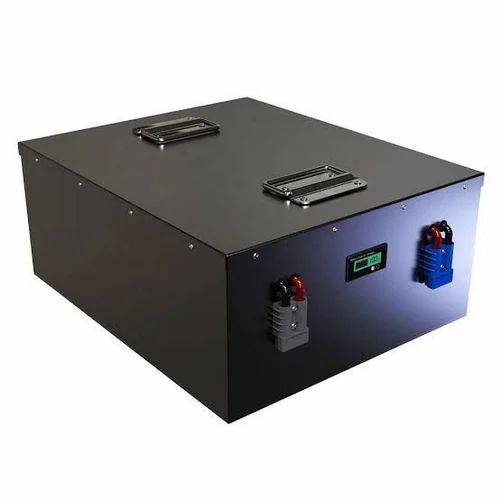
A heavy-duty battery housing is a reinforced sheet-metal enclosure for under-chassis EV traction packs in 3-wheelers, light 4-wheelers and industrial electric vehicles. KM Engineering manufactures these in 2.5–3.0 mm CRCA or 2.0 mm SS 304 with crash-reinforcement ribs, IP65 sealing, and thermal vent provisions — supporting pack capacities from 5 kWh to 20 kWh with a 15-day prototype lead time.
What Is Heavy Duty Battery Housing?
A heavy-duty battery housing is the robust structural enclosure that carries the main traction battery pack on the underside or behind the cabin of an electric vehicle. Unlike swap-pack enclosures, heavy-duty housings are semi-permanently mounted, must survive continuous road-load and impact exposure, and are engineered for thermal management of larger energy packs (5–20 kWh).
KM Engineering fabricates heavy-duty battery housings for Indian EV 3-wheeler OEMs (loader and passenger), light 4W commercial EVs, electric mini-trucks, and industrial electric vehicles (forklifts, AGVs, floor-cleaning equipment). Our designs carry 60 V–96 V LFP packs typically in the 5–20 kWh range, with reinforced skid plates, structural cross-ribs, cold-plate mounting provisions, and IP65 gasketing.
Each housing is engineered for Indian road conditions — pothole-loading, fordable water crossings, dust ingress, and a wide operating temperature range of –10 °C to 60 °C. Material choice is typically 2.5–3.0 mm CRCA for cost-optimized 3W applications, or 2.0–2.5 mm SS 304 for premium and corrosion-critical applications. We ship through our Badkhal Road Faridabad factory with ISO 9001-aligned QC documentation.
Detailed Specifications
Full technical specifications for Heavy Duty Battery Housing — material grades, tolerances, process capabilities, and standards compliance.
| Specification | Value / Description |
|---|---|
| Material — Steel | IS 513 CRCA 2.5 / 3.0 mm |
| Material — Stainless (option) | IS 6911 SS 304 / SS 316 — 2.0 / 2.5 mm |
| Typical Overall Envelope | 800 × 500 × 250 mm up to 1400 × 800 × 300 mm |
| Cutting Tolerance | ± 0.1 mm on parts ≤ 500 mm; ± 0.2 mm on large panels |
| Bending Tolerance | ± 0.5° angular, ± 0.3 mm linear |
| Welding | MIG (GMAW) full seam; TIG (GTAW) for SS or aluminum variants |
| Weld Integrity | Dye-penetrant test on sealed seams; optional leak test (air-decay 2 min) |
| Structural Reinforcement | Internal cross-ribs, corner gussets, reinforced mounting pads (6 mm plate) |
| Skid Plate | 3–4 mm mild steel or 4–5 mm aluminum 5052 (optional, bolted) |
| Ingress Protection | IP65 standard (closed-cell EPDM gasket + hydrophobic breather) |
| Pothole / Road-Shock Design | Qualified against OEM road-load spectra; mounting stiffness verified by FE-analysis on customer request |
| Cold-Plate Mounting | M6/M8 threaded bosses to customer pattern; flatness ± 0.3 mm across plate face |
| Thermal Vent | IP54-class louvred vent OR hydrophobic pressure-equalizing breather (Kaizer/Gore alternative) |
| Surface Pre-Treatment | 7-tank phosphate, phosphate weight 2–4 g/m² |
| Powder Coating Thickness | 80 µm exterior, 60 µm interior; optional anti-chip underlayment |
| EMI Shielding | Full metal envelope; conductive gasket on lid-to-body interface if specified |
| Operating Temperature | Designed for –10 °C to +60 °C ambient |
Manufacturing Process
How KM Engineering fabricates Heavy Duty Battery Housing — step-by-step process from drawing review to dispatch.
DFM & FE-Analysis Alignment
Review of customer drawings and road-load spectrum; rib placement, gusset sizing, and mounting-bracket reinforcement validated against stiffness targets. Where customer provides FEA, we align design; where not, we apply standard rib-pattern best practices.
Material Qualification & Cutting
CRCA / SS sheets inspected and TC-matched. Fiber-laser cut; large panels held under laser-vision registration for tolerance. Parts marked with batch ID for traceability.
Press-Brake Bending
Large panels bent on CNC press-brake with custom tooling; sequence programmed to maintain corner squareness within 0.3°.
MIG Welding — Skid Plate & Reinforcements
Cross-ribs, corner gussets and mounting pads MIG-welded to base pan with controlled heat input. Anti-distortion jig used for envelopes > 1000 mm.
Skid-Plate Bolted Assembly
Bolted skid plate (M8/M10) attached post-coating with sealing washers; alternative welded skid on SS variants.
Leak & Dimensional Check
Dye-penetrant on all sealed seams; diagonal and flatness checks; cold-plate mounting flatness verified on granite surface plate.
7-Tank Pre-Treatment
Degrease, phosphate, passivate — large-dip line sized up to 2000 × 1000 × 400 mm.
Powder Coating & Curing
Electrostatic powder application; cured at 190 °C for 20 minutes in paint tunnel. Full coverage on inside cavity verified on sample cuts.
Gasket, Breather & Thermal-Mount Assembly
EPDM gasket bonded into lid channel, breather valve threaded in, cold-plate bosses checked for threaded engagement.
Final QC, FAI Documentation, Dispatch
100% visual + dimensional sampling per AQL 1.5; FAI report on first-article batches; individually palleted; full dispatch package (DC, invoice, material TC, FAI).
Request a Quote for Heavy Duty Battery Housing
Share your drawings or requirements — we respond within 24 hours with a DFM review and priced offer.
Standards & Compliance
KM Engineering manufactures Heavy Duty Battery Housing in alignment with the following Indian and international standards:
- AIS-156 — Automotive Industry Standard for L-category EVs (alignment)
- IS 513, IS 6911 — CRCA and stainless steel grades
- IEC 60529 — IP ratings
- ASTM B117 — Salt-spray corrosion test reference
- ISO 9001:2015 — QMS alignment
- AIS-038 / AIS-041 — Relevant EV electrical safety guidelines (enclosure supports compliance)
Industries & Applications
Heavy Duty Battery Housing by KM Engineering is used across multiple Indian industries. Below are typical buyers, their applications, and why they choose us:
EV 3W — Loader (Cargo)
Application: Under-chassis traction battery housing for e-loaders carrying 500–800 kg payload
Why KM: Heavy-gauge CRCA + reinforced skid plate survives loaded-pothole impacts; cost-optimized design for competitive e-loader BOM
EV 3W — Passenger
Application: Under-seat or rear-mount battery housing for electric passenger auto-rickshaws
Why KM: IP65 sealed against Indian monsoon road-spray; low-profile envelope preserves passenger legroom
Electric Mini-Truck / LCV
Application: Behind-cabin or under-load-bed battery housings for light commercial electric trucks
Why KM: Structural ribbing and mounting points sized for chassis integration; cold-plate interface for active cooling
Electric Forklifts & Industrial EVs
Application: Counterweight-integrated or cabinet-style battery housings for material-handling EVs
Why KM: Thick-section construction handles daily 3-shift operation; IP54 to IP65 for dust-heavy warehouse environments
Electric Floor Scrubbers & Cleaning EVs
Application: Waterproof traction battery enclosure for ride-on scrubbers and sweepers
Why KM: IP65/IP67 stainless-option for daily wash-down environments; rounded corners for hygienic cleaning
Customization Options
Every Heavy Duty Battery Housing we fabricate is made to the customer's drawing or specification. Customizable aspects include:
- Envelope size and mounting pattern — any OEM chassis interface
- Material — CRCA 2.5/3.0 mm, SS 304/316 2.0/2.5 mm, mild steel with e-coat
- Skid plate — welded mild steel, bolted aluminum, or integrated rock-guard
- IP rating — IP54 / IP65 / IP67 with matched gasket and vent
- Cold-plate interface — milled flat pads or welded-in aluminum cold plate
- Cable-gland positions — M20/M25/M32 customer-specified
- Vent system — louvres, hydrophobic breathers, pressure-equalization valves
- Internal cell-holder pockets — LFP prismatic or 18650/21700 pack layouts
- Finish — standard RAL, textured, anti-chip primer, underbody protective coating
Quality Assurance & Testing
Each Heavy Duty Battery Housing undergoes the following QC steps as part of our ISO 9001:2015-aligned quality system:
- FAI dimensional report on first-article
- Material TC verification per heat lot
- Dye-penetrant on all sealed seams
- Air-decay leak test (optional) — 2 minutes, pressure drop < 0.5 kPa
- Flatness check on cold-plate interface — ± 0.3 mm across plate
- Salt-spray test per batch — ASTM B117, 240 hours minimum
- Coating thickness check and cross-hatch adhesion per batch
- 100% visual final QC
- Optional vibration / drop acceptance at partner lab (ICAT / ARAI)
How We Compare
Here is how KM Engineering's Heavy Duty Battery Housing compares against alternative supplier options available to Indian buyers:
| Criterion | KM Engineering | Local Unorganized Fabricator | Premium Imported Supplier |
|---|---|---|---|
| Sheet Gauge | 2.5–3.0 mm CRCA | 2.0–2.5 mm (generic) | 2.5–3.0 mm (premium import) |
| Skid-Plate Option | Integrated 3–5 mm | Rarely included | Aluminum standard |
| Pothole-Rated Mount Design | Reinforced pads + gussets | Plain brackets | Validated via FEA |
| Material Documentation | TC + traceability | TC optional | Full PPAP included |
| Cost vs Premium Import | 30–45% lower | 20–30% lower | Baseline |
| Lead Time | 15 days prototype | 3–4 weeks | 8–10 weeks |
| Customization Flexibility | Full drawing-to-part | Catalog-based | Limited |
Ordering & Lead Time
Frequently Asked Questions
What is the difference between a compact swap-pack enclosure and a heavy-duty battery housing?
A swap-pack enclosure is designed for portability (under 12 kg fitted), manual handling and frequent docking cycles. A heavy-duty housing is chassis-mounted, carries 5–20 kWh of cells, is built from 2.5–3.0 mm steel with structural reinforcement, and is engineered for continuous road-load exposure. The two product families address different EV topologies: swap vs fixed-pack.
Do you engineer the housing for specific road-load spectra?
We apply proven design patterns for Indian road conditions — rib spacing, mounting-pad thickness, and gusset placement — against typical 3W and light 4W load profiles. For a specific OEM road-load spectrum, we recommend sharing the target PSD or mission profile, and optionally engaging a partner lab (ICAT, ARAI, IIT-SP) for FEA correlation.
Is the skid plate bolted or welded?
Both options are offered. Bolted skid plates (M8/M10 with sealing washers) are serviceable and replaceable after rock strikes — preferred by fleet operators. Welded skid plates give a cleaner seal and are preferred on SS 304 premium builds where rock-strike frequency is low.
Can you provide a cold-plate interface for active thermal management?
Yes. We machine-flat the interface pad and provide threaded bosses (M6/M8) to customer pattern. Flatness tolerance is ± 0.3 mm across the full plate face. We can also source and integrate an aluminum cold plate under a linked-supply arrangement.
What IP rating do you recommend for Indian EV 3W?
IP65 is the practical choice for Indian 3W applications — it protects against heavy monsoon spray, dust and typical fordable water crossings without over-engineering. IP67 (immersion-rated) is recommended only where the vehicle may submerge briefly, and adds 12–20% to unit cost plus 8–12 days to lead time.
Do you support AIS-156 battery-pack certification?
Our housings are designed in alignment with AIS-156 mechanical and ingress requirements. The AIS-156 certification itself is issued at the pack level (enclosure + cells + BMS tested together) by an accredited lab such as ARAI or ICAT. We supply the enclosure with engineering documentation that supports the OEM's certification submission.
What sheet thickness do you recommend — 2.5 mm or 3.0 mm?
For pack capacities up to 10 kWh in 3W applications, 2.5 mm CRCA is typical and cost-optimized. For 10–20 kWh packs, light 4W applications, or heavy industrial vehicles, 3.0 mm CRCA or 2.5 mm SS 304 is recommended for additional mounting-pad reinforcement and crash energy absorption.
How do you handle welding distortion on large envelopes?
Envelopes > 1000 mm are welded in anti-distortion fixtures with controlled sequence and inter-pass temperature limits. Post-weld, we measure diagonal and flatness; any out-of-tolerance units are re-worked by stress-relief heating or corrective straightening before coating.
Do you provide mounting hardware kits?
Yes. On request we kit mounting bolts, washers, sealing grommets, and cable glands in a separate bagged BOM shipped with each housing — convenient for OEM line-side assembly.
Related Products
Other products frequently considered alongside Heavy Duty Battery Housing:
Ready to Source Heavy Duty Battery Housing?
Share your drawings or requirements with KM Engineering. Our Faridabad team responds within 24 hours with a DFM review, lead time and priced offer.